Which lamp socket should a commercial string light project use?
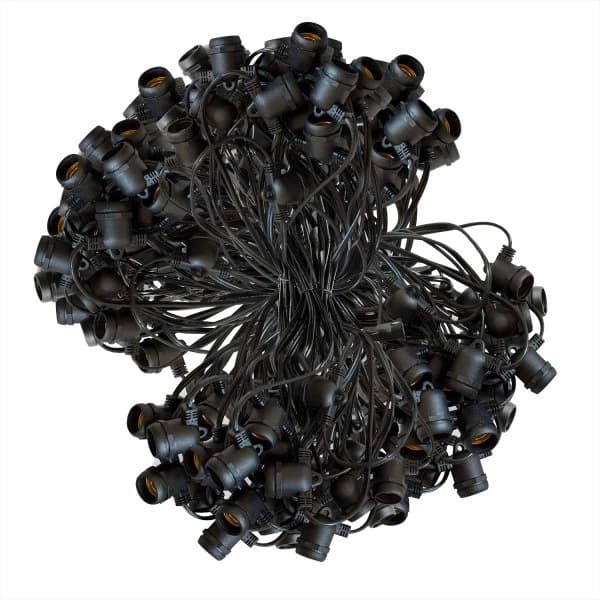
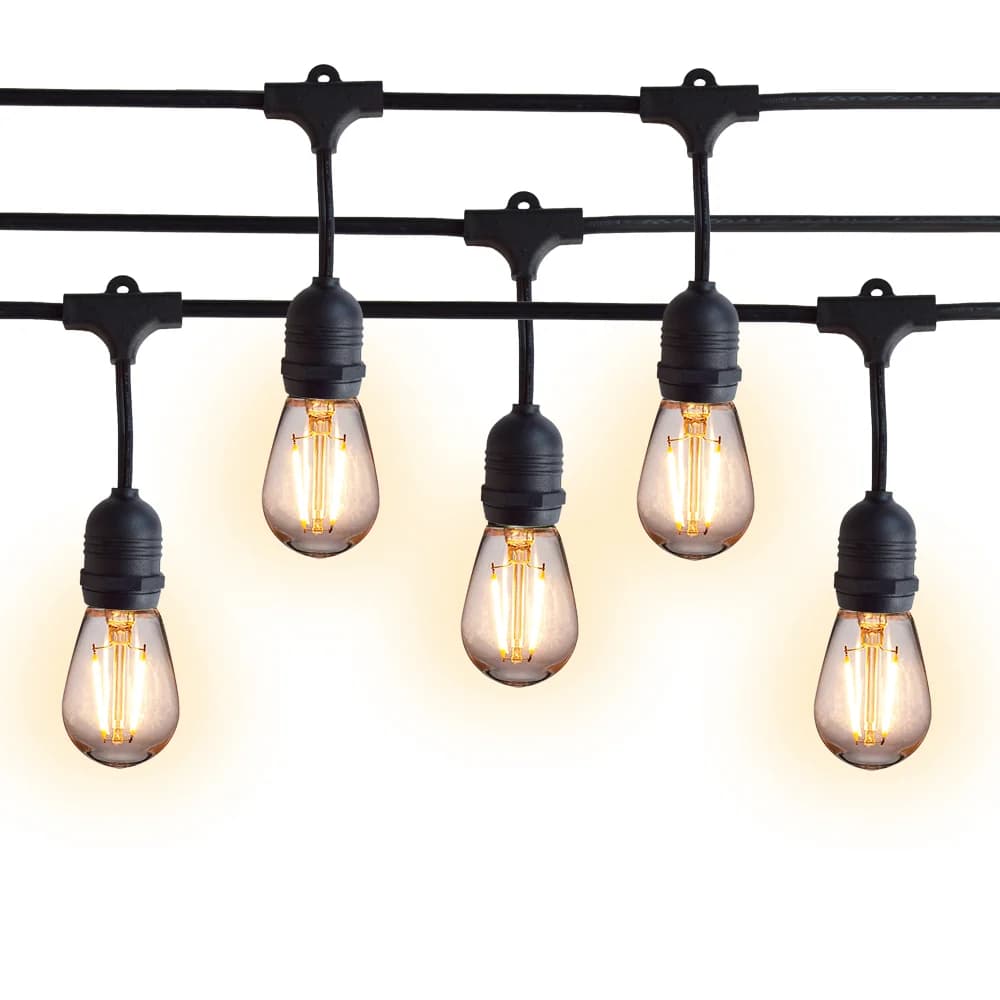
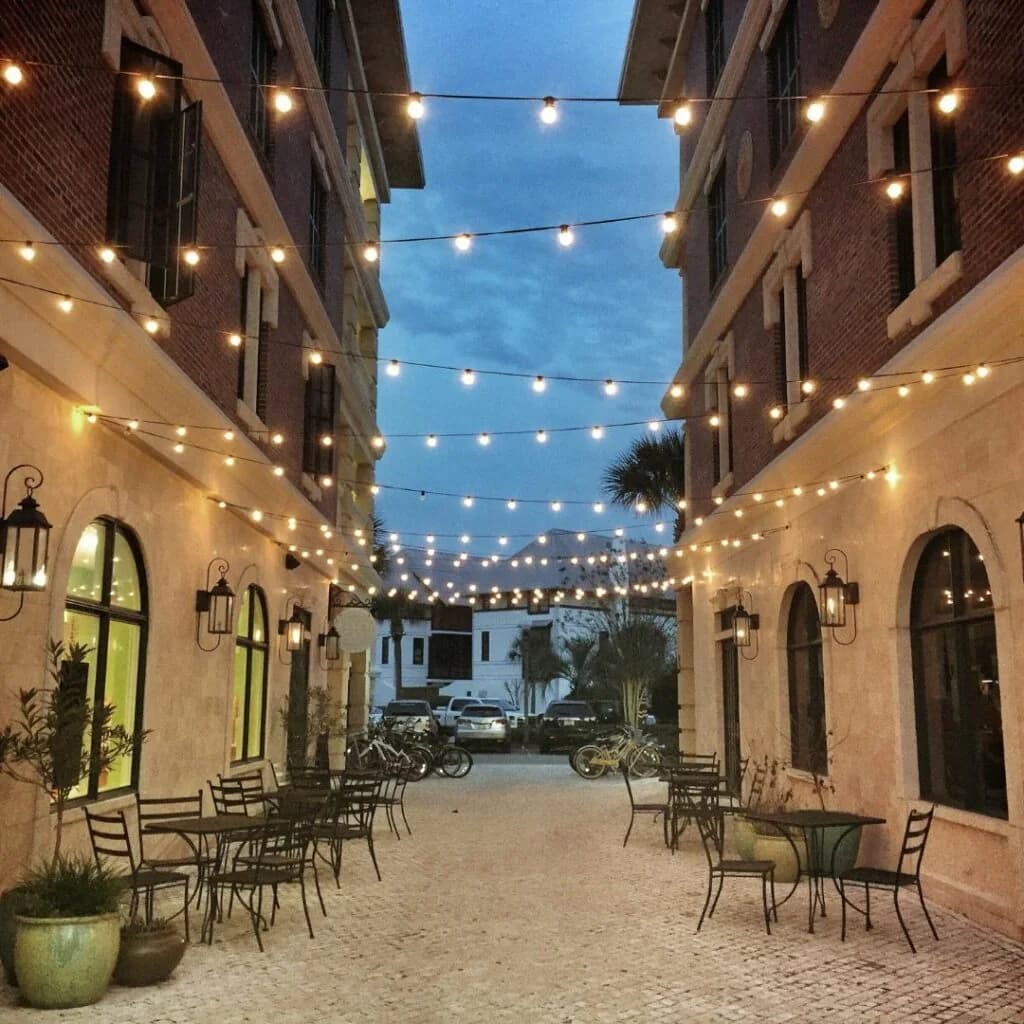
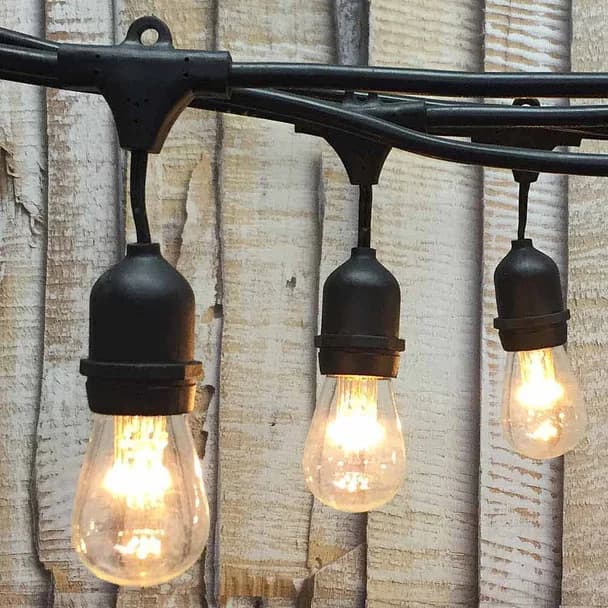
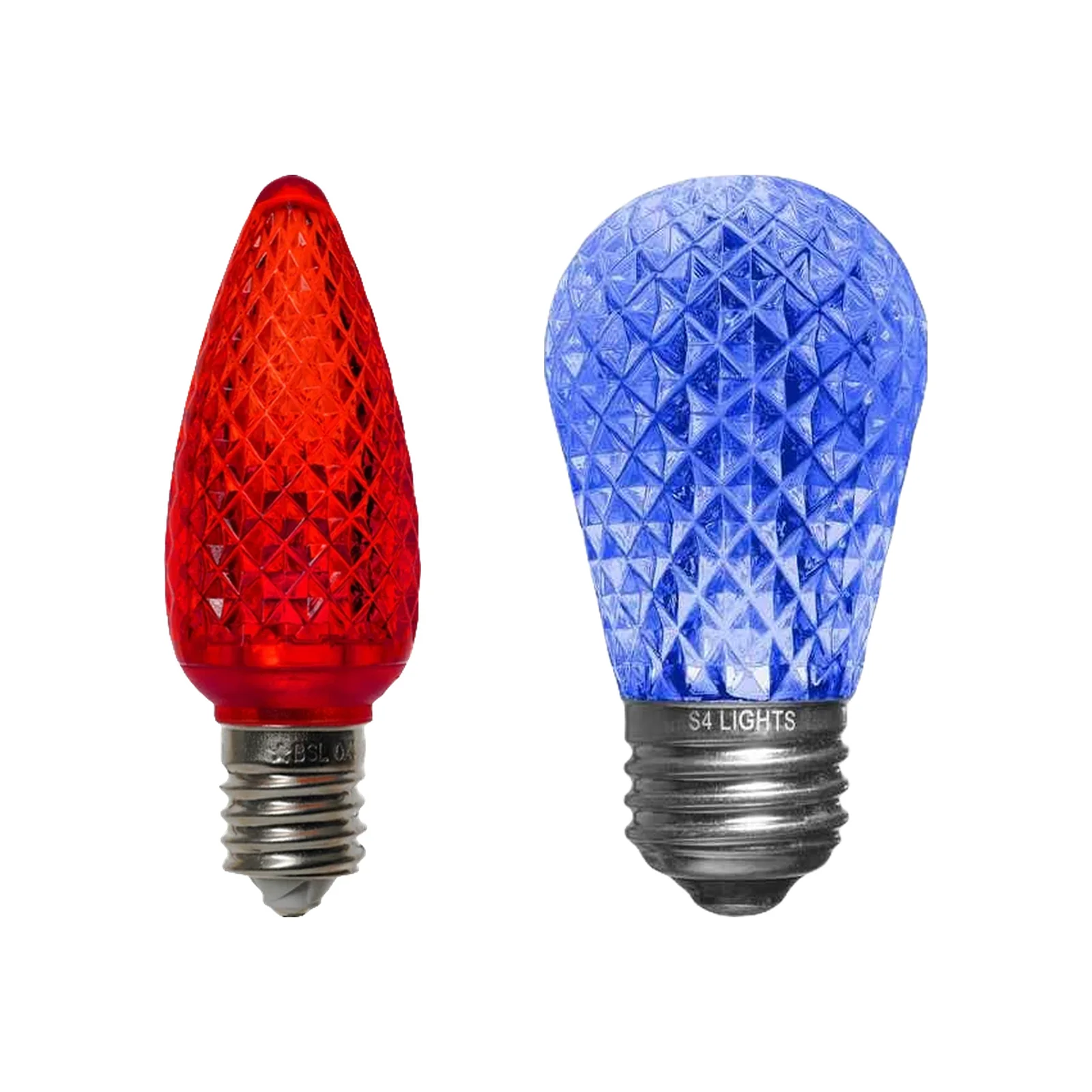
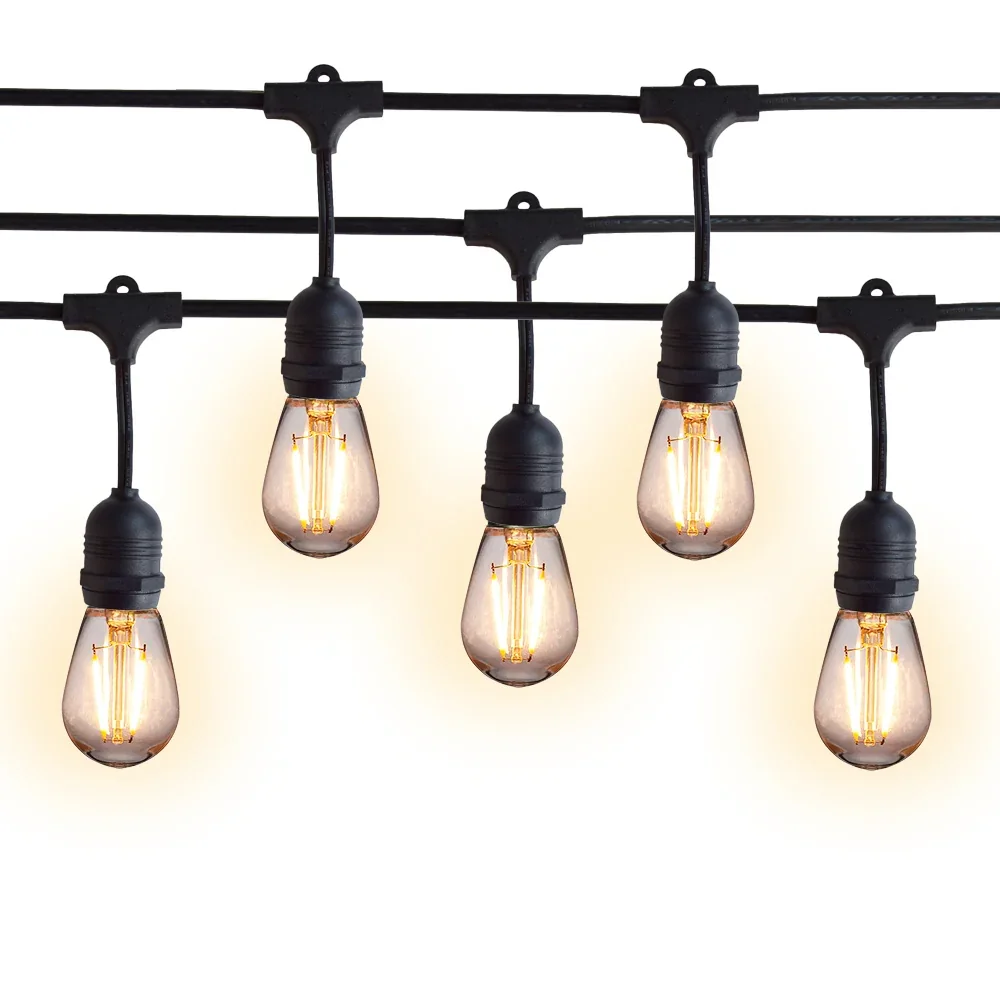
E26 suspended sockets are commonly paired with S14 lamps for patios, restaurants, hotels, courtyards, and event spaces. E17 sockets pair with C9 lamps when a smaller decorative or seasonal profile is preferred. Confirm the base size, voltage, cable and socket ratings, spacing, and outdoor suitability as one specification.
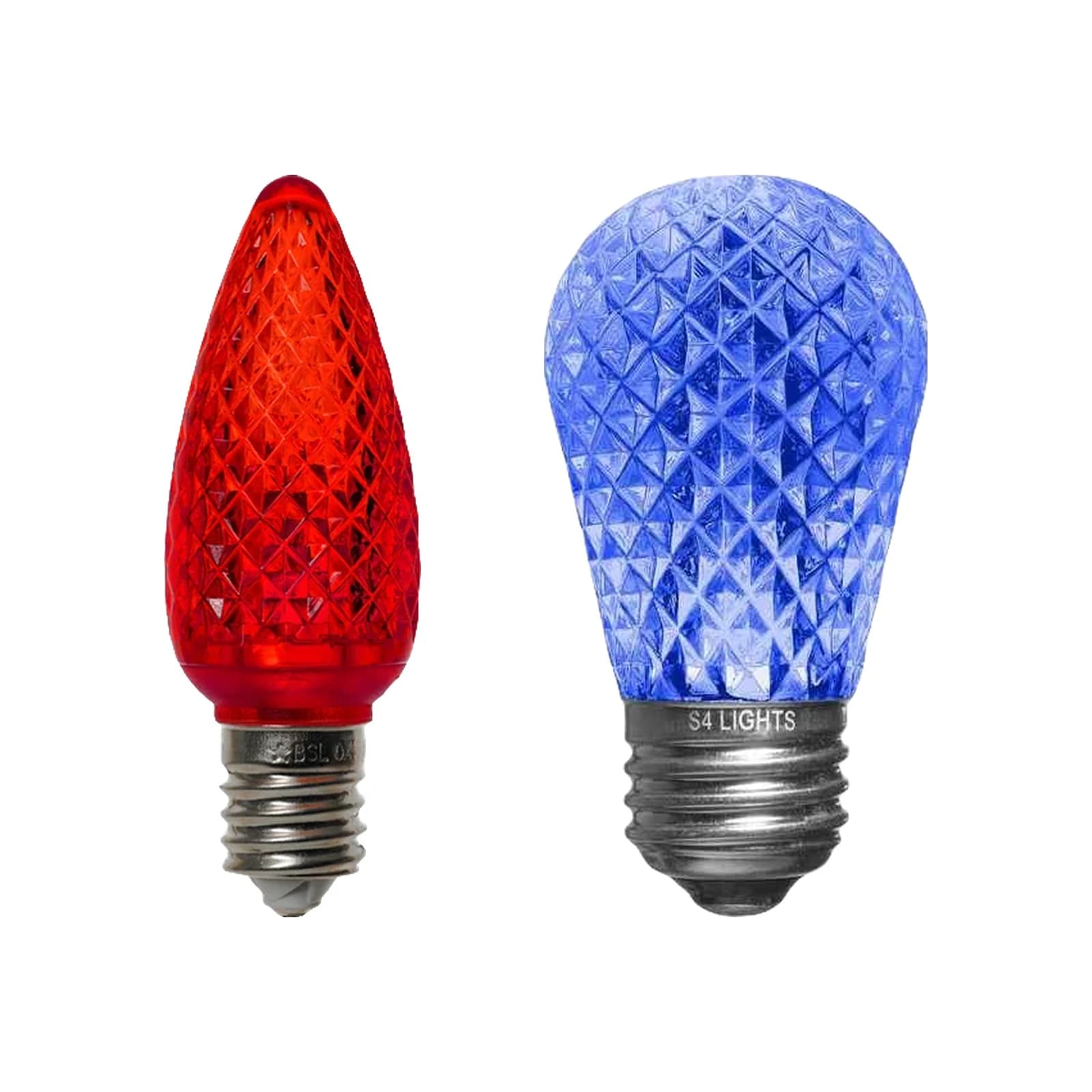
Which bulb should be used: C9 or S14?
Choose S14 for the recognizable bistro-light appearance and a larger visual presence. Choose C9 for compact decorative points, seasonal color, or tighter layouts. Color temperature, lens, output, base, voltage, dimming, and replacement requirements should all be confirmed before ordering.
How long should commercial string lights be?
Measure each suspended span, perimeter run, power lead, transition, and vertical drop. Include the designed sag and service allowance, then verify total lamp load, permitted connected length, circuit capacity, support spacing, and control zones. A site drawing is more reliable than choosing a standard kit length.
Do long string light spans need a guide wire?
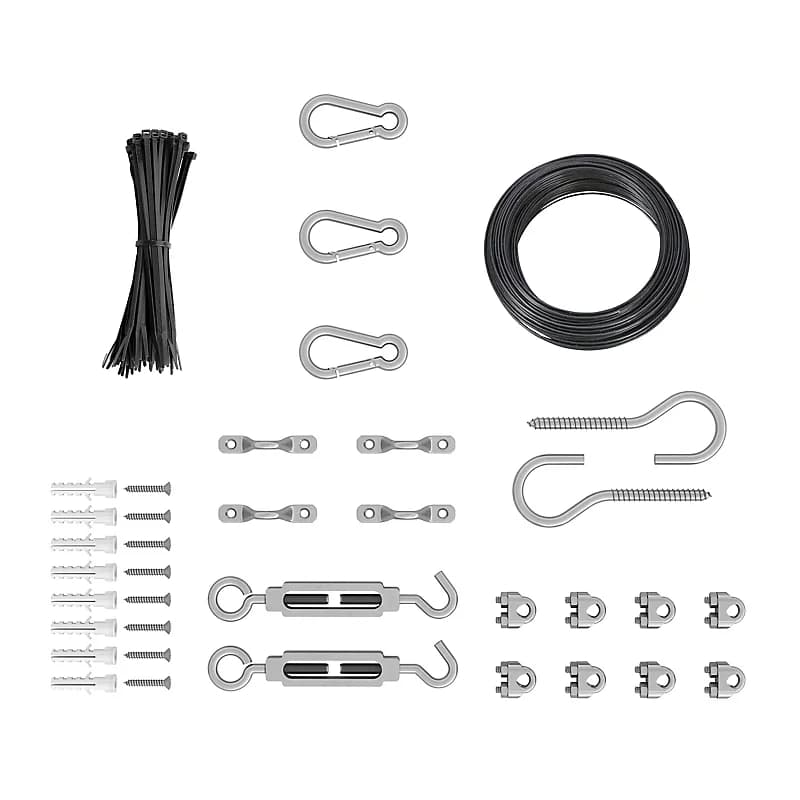
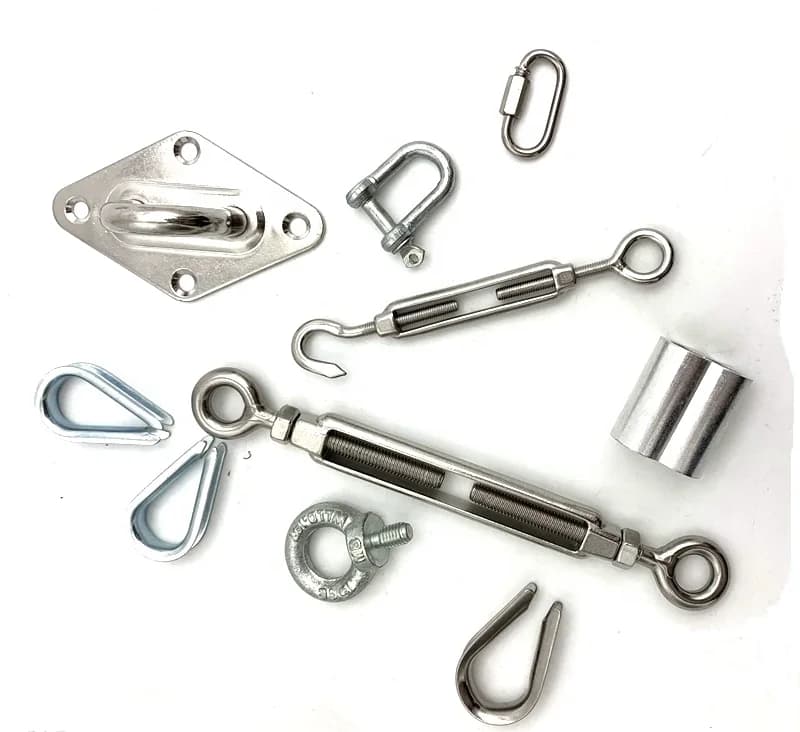
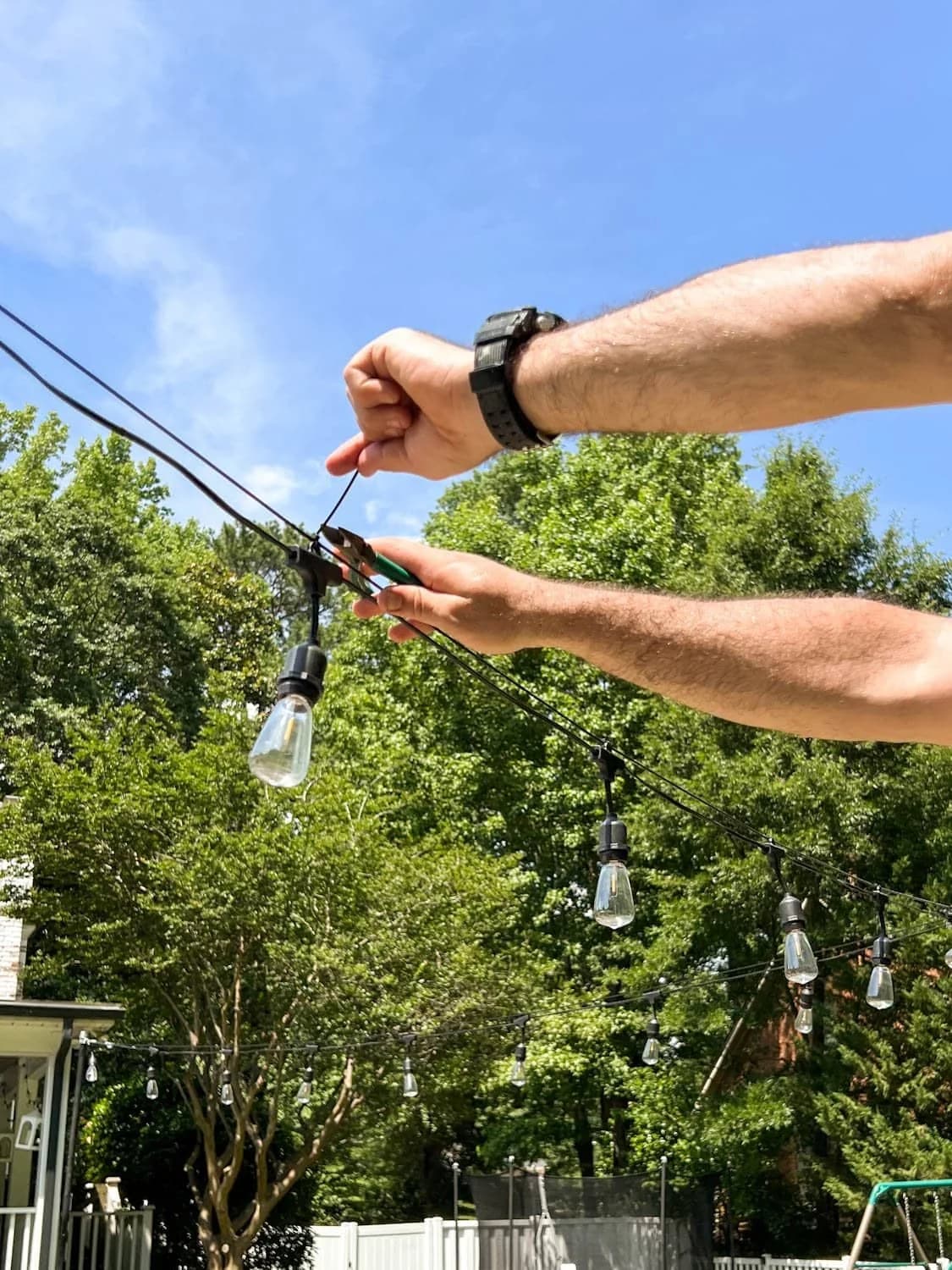
Long or exposed spans commonly require a separate structural support cable with appropriate anchors, turnbuckles, clamps, and attachment points. The light string should not be assumed to carry structural loads. Site conditions and local requirements determine the final support design.
When are string light poles required?
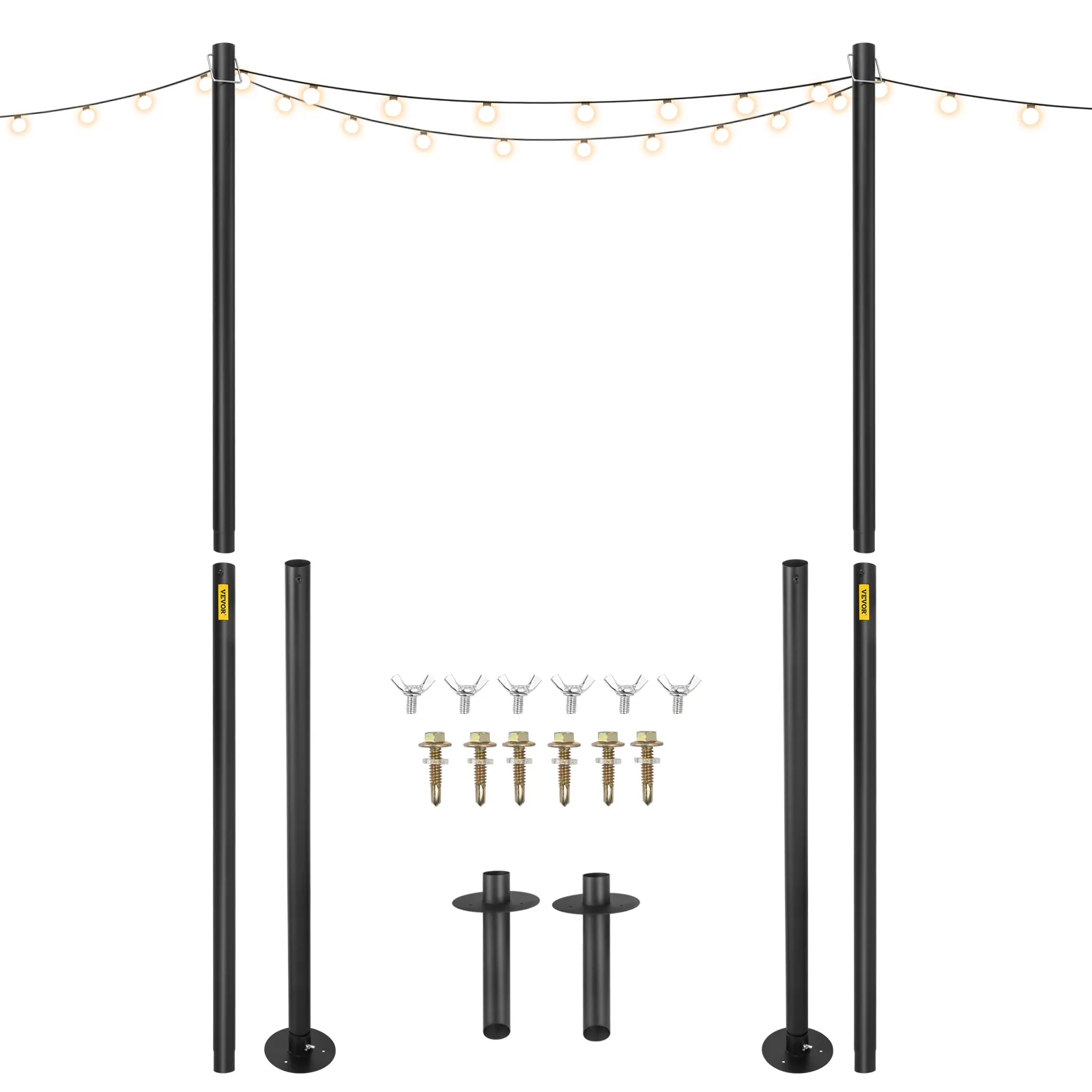
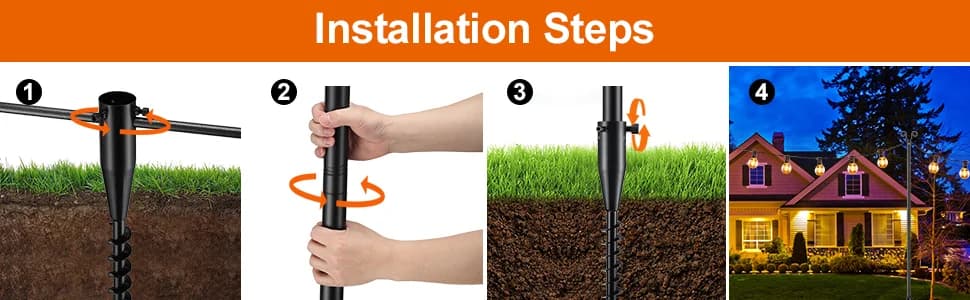
Poles create elevated support points where buildings, trees, or existing structures are unavailable or poorly positioned. Pole type, height, base or ground mounting, spacing, tension, clearance, wind exposure, and underground conditions must be reviewed for the project.
Can commercial string lights be supplied as a complete project kit?
Yes. We can configure socket lines, bulbs, poles, guide wire, tensioning hardware, mounting parts, power and control requirements, replacement stock, and project-based packaging as one coordinated system.
Can components be packed by project or installation phase?
Yes. Job-based, zone-based, phased, wholesale, and qualified private-label packing can be evaluated after the layout and bill of materials are approved.