Quick answer: OEM, ODM, and private label defined
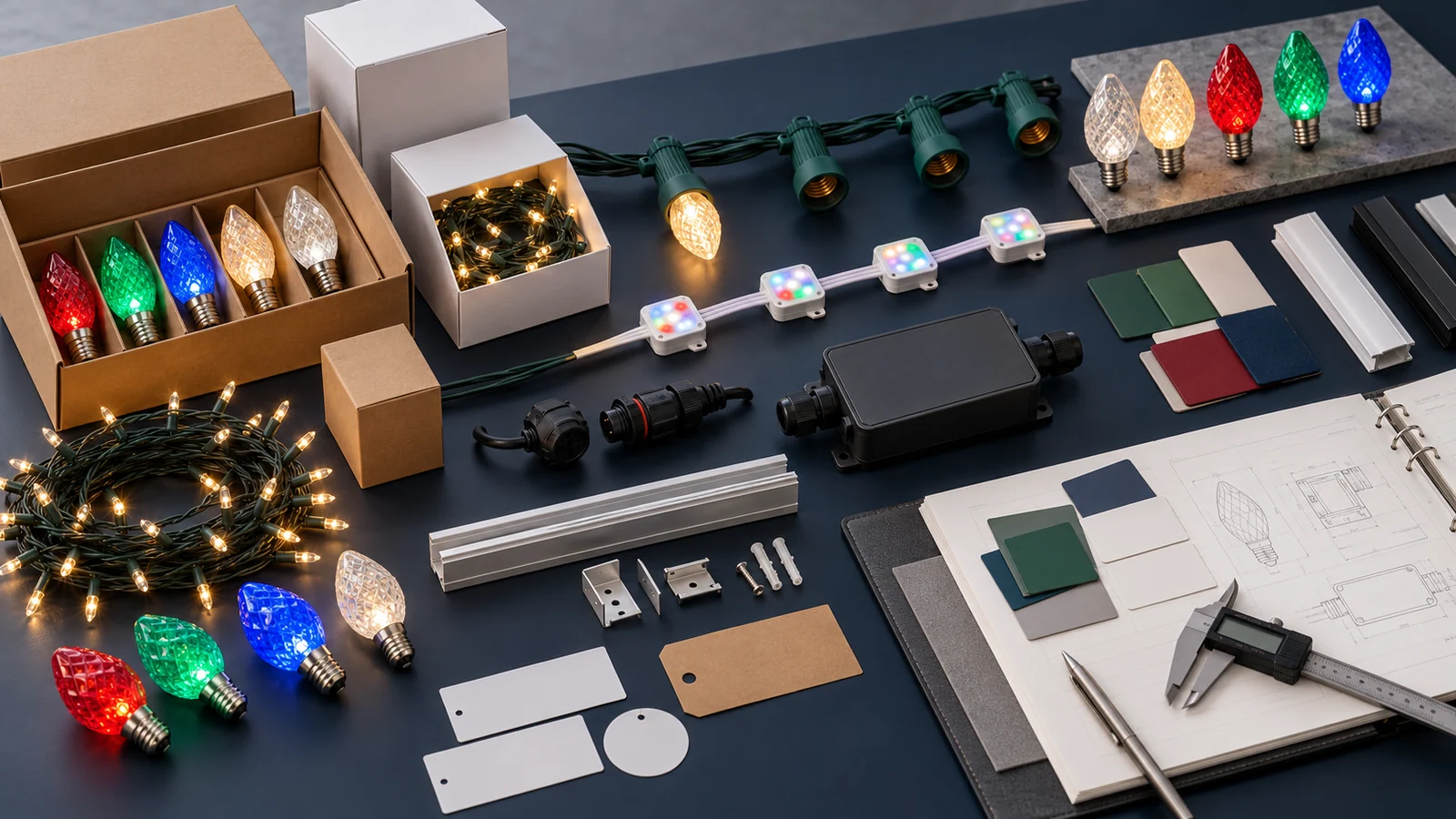
Private label Christmas lights usually start with an existing manufacturer-developed product or configuration. The buyer adds its brand, packaging, labels, manuals, and an agreed set of product options. ODM usually starts with a supplier-developed product platform that is adapted for the buyer's market, features, appearance, packaging, or controls. OEM usually means the manufacturer produces to buyer-controlled requirements, such as specifications, drawings, components, performance criteria, and quality controls.
These terms are used differently across suppliers and markets, so the label on a quotation is not enough. The important questions are who controls the product specification, who owns tooling and technical files, which changes require approval, whose certification covers the product, and who must support compatible replacements after launch.
The most useful question: who controls the product specification?
A sourcing team should not choose a program from three acronyms alone. Begin by identifying the controlled specification: the document set that defines the approved product, components, appearance, packaging, test criteria, firmware, and revision. Then identify who created it, who may change it, and who owns each part of it.
A program described as private label can contain custom components. An ODM platform can incorporate buyer-owned packaging or software requirements. An OEM program can still use standard supplier components. Treat OEM, ODM, and private label as working descriptions; the quotation, approved specification, and supply agreement must define the actual responsibilities.
What private label means for a Christmas lighting brand
Private label is generally the most direct route when a brand wants a proven product category under its own identity without developing the underlying platform from the beginning. The starting point may be an established mini-light string, C7/C9 bulb and socket line, permanent lighting kit, controller, accessory set, or coordinated product family.
The buyer still needs to approve more than a logo. Product labels, model numbers, packaging, manuals, warning language, barcode data, master cartons, included accessories, replacement parts, and approved options should be documented. If the product itself changes, the program may move beyond a simple private-label scope and require additional engineering or compliance review.
What ODM means for Christmas lights
In an ODM program, the supplier normally contributes the underlying product design or platform and adapts it for the buyer. For a permanent RGBW system, this could involve a supplier-developed electrical and control platform combined with agreed track finishes, kit contents, controller configuration, app presentation, packaging, and service parts. For seasonal lights, it could involve an existing construction adapted through bulb style, spacing, wire color, connector, or packaging choices.
ODM can give a brand meaningful differentiation without requiring it to create every drawing or engineering decision internally. The agreement should still identify which elements are standard supplier technology, which are exclusive or buyer-owned, what may be sold to other customers, and how future revisions and compatibility will be managed.
What OEM means for Christmas lights
OEM is the better working description when the buyer supplies or controls a substantial part of the product definition. That may include drawings, dimensions, materials, approved components, electrical requirements, optical targets, connectors, firmware behavior, test methods, packaging specifications, or inspection criteria.
OEM does not automatically mean that every component is unique or that the buyer owns every design right. It means the manufacturing relationship is driven by an agreed buyer-controlled requirement set. Ownership, permitted use, tooling, substitutions, certification responsibilities, and engineering-change approval must still be stated explicitly.
Private label, ODM, and OEM can exist in one lighting program
A complete Christmas lighting range often uses more than one development model. A brand may private-label established C7/C9 bulbs, use an ODM permanent-lighting platform with customized controls and packaging, and commission an OEM mounting component built to its own drawing. The correct model can therefore be chosen by product or subsystem rather than forced across the entire catalog.
This mixed approach is practical only when interfaces are controlled. Bulbs, sockets, wire, plugs, power supplies, controllers, connectors, track, accessories, packaging, and replacement parts must be checked as one system even when their commercial models differ.
Three levels of Christmas light customization
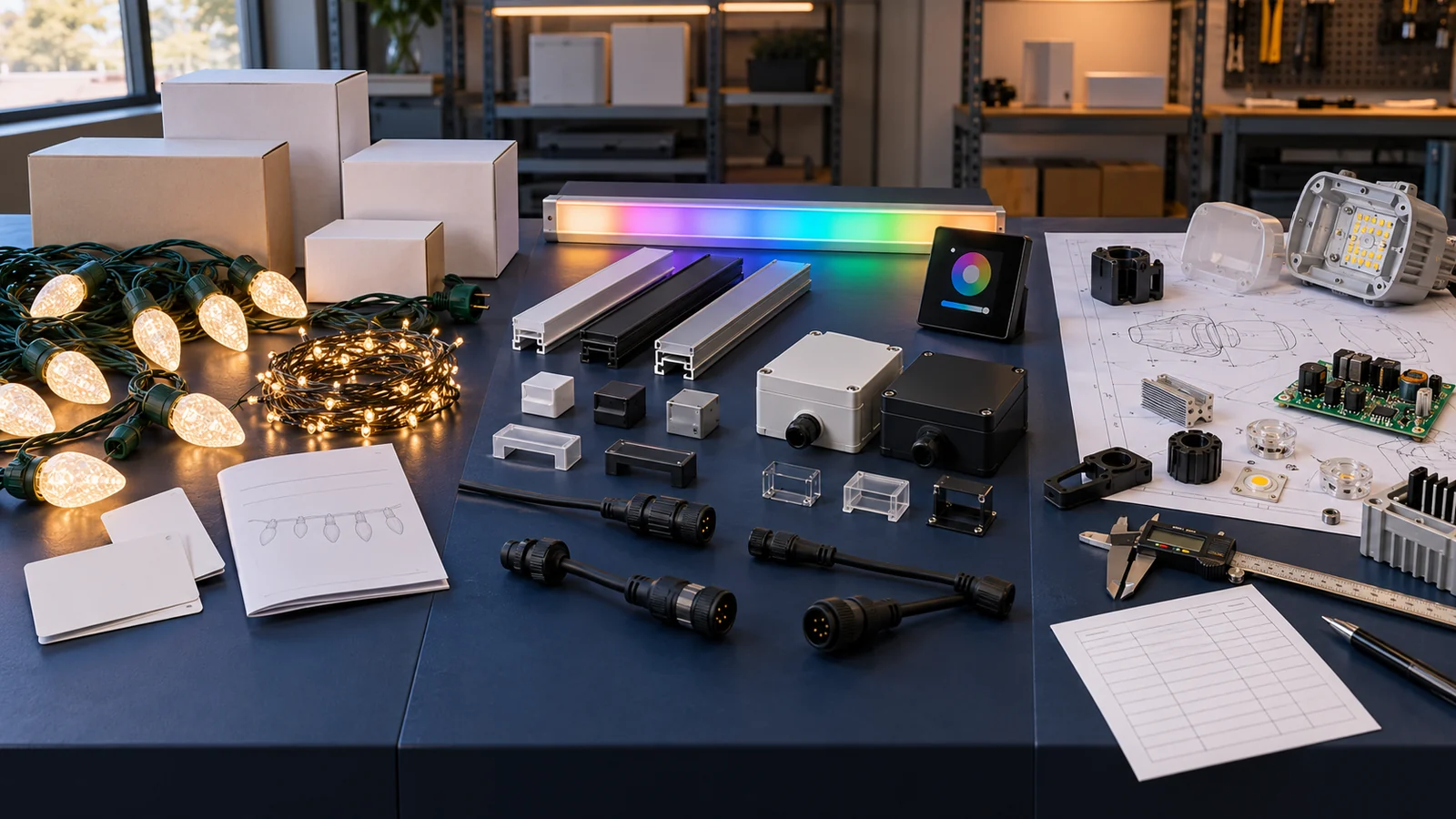
A useful way to define the project is to separate customization into brand, product, and platform layers. This shows suppliers exactly what must change and prevents a packaging request from being confused with a new product-development program.
- Brand layer: logo, model naming, product labels, packaging artwork, manuals, barcodes, carton marks, and sales materials
- Product layer: bulb style, light color, wire color, spacing, connector, track finish, accessories, kit composition, and service-part selection
- Platform layer: electrical architecture, controller, firmware, app, compatibility rules, tooling, test criteria, and replacement architecture
Which option should a new lighting brand choose?
Choose private label when the priority is to test a market, extend a catalog, or launch an established product configuration with controlled branding and documentation. Choose ODM when the brand needs visible or functional differentiation but does not intend to create the complete technical platform from the beginning. Choose OEM when the brand has a clear controlled specification, requires tighter product ownership or change control, or is building a long-term proprietary program.
The best starting model is the least complex one that can deliver the required customer value and protect the brand's future service obligations. A company can begin with private label, collect field and channel feedback, then move selected products toward deeper ODM or OEM development. That progression should be planned so model numbers, compatibility, certification, inventory, and replacement parts remain controlled.
Who owns the drawings, molds, software, and product data?
Ownership cannot be inferred from the words OEM or ODM. The written agreement should separately address product drawings, molds and tooling, packaging artwork, firmware, app accounts, source code where applicable, test fixtures, certification files, product photography, technical data, approved component lists, and replacement-part specifications.
An NDA protects confidential information but does not by itself answer every ownership or use question. Define who paid for each asset, who may use it, whether it is exclusive, where it will be stored, who maintains it, what access subcontractors receive, and what happens when the supply relationship ends. Use qualified legal counsel for the relevant jurisdictions.
How customization can affect certification scope
A packaging or brand change does not automatically redesign the electrical product, but labels, warnings, manuals, model identification, and regulatory information still require review. Changes to wire, plug, connector, power supply, controller, enclosure, materials, construction, or production location may affect the approved configuration or require additional evaluation.
Ask for evidence that matches the exact model, manufacturer, voltage, construction, components, production site, and target market. Do not assume that a similar product certificate covers a customized version. UL and ETL are separate certification programs, and any claimed listing should be checked in the official directory of the named certification body.
Use staged samples and a controlled golden sample
Sample approval should follow the depth of customization. A practical sequence may include an appearance sample, an engineering or functional sample, a packaging sample, and a final approved reference sample. Each stage should state what is being evaluated and who has authority to approve it.
The final golden sample or equivalent approval record should link to the current drawings, bill of materials, color standards, artwork, firmware version, test criteria, and packaging configuration. No material, component, construction, software, or artwork change should enter production without the agreed review and approval process.
How OEM, ODM, and private label affect MOQ, tooling, and lead time
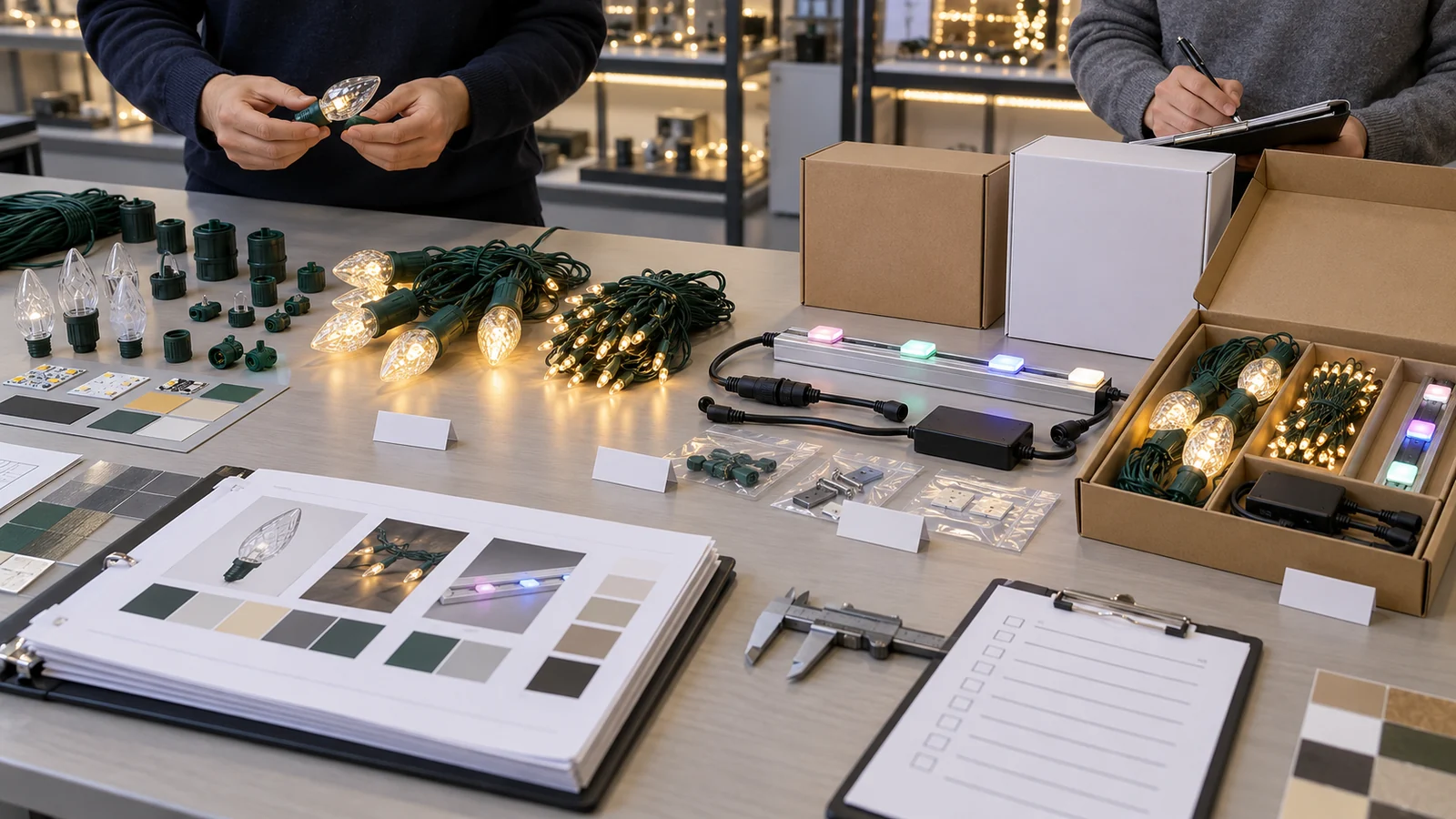
There is no universal MOQ or lead time for any of the three models. A standard product with existing components and branded packaging may require less setup than a custom wire color, connector, housing, controller, app, mold, or newly evaluated construction. However, even a private-label program can become complex when it contains many SKUs, languages, packaging formats, or special documentation.
Request a quotation that separates product minimums, color or packaging minimums, engineering work, tooling, artwork, samples, testing, certification, setup, and service stock. Ask for a milestone schedule rather than one unsupported delivery number. The supplier should confirm the assumptions for the exact program after reviewing the complete brief.
What to send in an OEM, ODM, or private label RFQ
A clear RFQ allows a manufacturer to recommend the correct program model and quote the same scope that you intend to buy. Mark confidential files appropriately and use a confidentiality agreement before sharing sensitive technical or commercial information.
- Target country, customer, sales channel, use environment, brand position, and planned launch date
- Product family, system components, required performance, appearance, controls, and compatibility
- Customization divided into brand, product, and platform layers
- Expected annual volume, first-order quantity, SKU mix, packaging languages, and delivery location
- Required certification scope, sample stages, inspection criteria, warranty process, and replacement-part plan
- Buyer-owned drawings, tooling, software, artwork, data, confidentiality needs, and change-approval authority
How Permanent Lighting Systems supports lighting brands
Permanent Lighting Systems works with lighting brands, distributors, dealer networks, and product companies on private-label, ODM, and OEM programs. We help turn the buyer's brief into a coordinated system scope covering products, interfaces, samples, branding, packaging, manuals, labels, quality planning, and replacement parts.
China and Vietnam manufacturing routes can be evaluated after the product configuration, market, forecast, timing, and compliance requirements are understood. The appropriate program model, feasibility, MOQ, tooling, certification scope, production location, capacity, lead time, and pricing are confirmed for the specific project rather than assumed from a general product category.
At-a-glance comparison
| Program model | Typical starting point | Best fit |
|---|---|---|
| Private label | Existing product or configuration plus buyer branding, packaging, labels, and approved options | Market testing, catalog expansion, and brands that do not need a new technical platform |
| ODM | Supplier-developed platform adapted for the buyer's market, features, appearance, packaging, or controls | Brands seeking differentiation without developing the full product from the beginning |
| OEM | Buyer-controlled requirements such as specifications, drawings, components, performance, and QC criteria | Long-term programs needing tighter product control, engineering ownership, or proprietary requirements |
Capabilities, certification scope, timelines, MOQ, production location, and country of origin must be confirmed for the exact supplier, product, and transaction. Generated images in this guide are illustrative and are not factory-audit evidence. Complete your own supplier due diligence and use qualified compliance and legal advisors where appropriate.