
Quick answer
A C9 bulb can fail with a pop, flash, blackened base, or damaged socket when the two electrical contacts inside the socket no longer maintain the intended separation. In this case, the field photos suggest that an oversized, deformed, or incorrectly positioned terminal may have reduced the available clearance. Tightening the bulb could then move the contact into an unintended position and create a short circuit or electrical arcing.
That is a preliminary photo-based assessment, not a final laboratory finding. Confirming the exact cause requires physical samples, dimensional inspection, compatibility checks, and controlled electrical testing by qualified personnel.
What the customer reported
A US buyer contacted us after sourcing C9 bulbs and 1,000 ft C9 socket-line spools from another holiday-lighting factory. The larger purchase reportedly included 70 spools. According to the buyer, three 1,000 ft spools sent to three separate end customers all produced lamp or socket failures after installation, and the original supplier had not resolved the issue.
The repeated reports across separate installations made it important to stop treating the event as a single damaged bulb. We recommended isolating the affected stock, preserving failed samples, recording spool and lot information, and screening representative inventory before more material was sold or installed.
What the field photos show
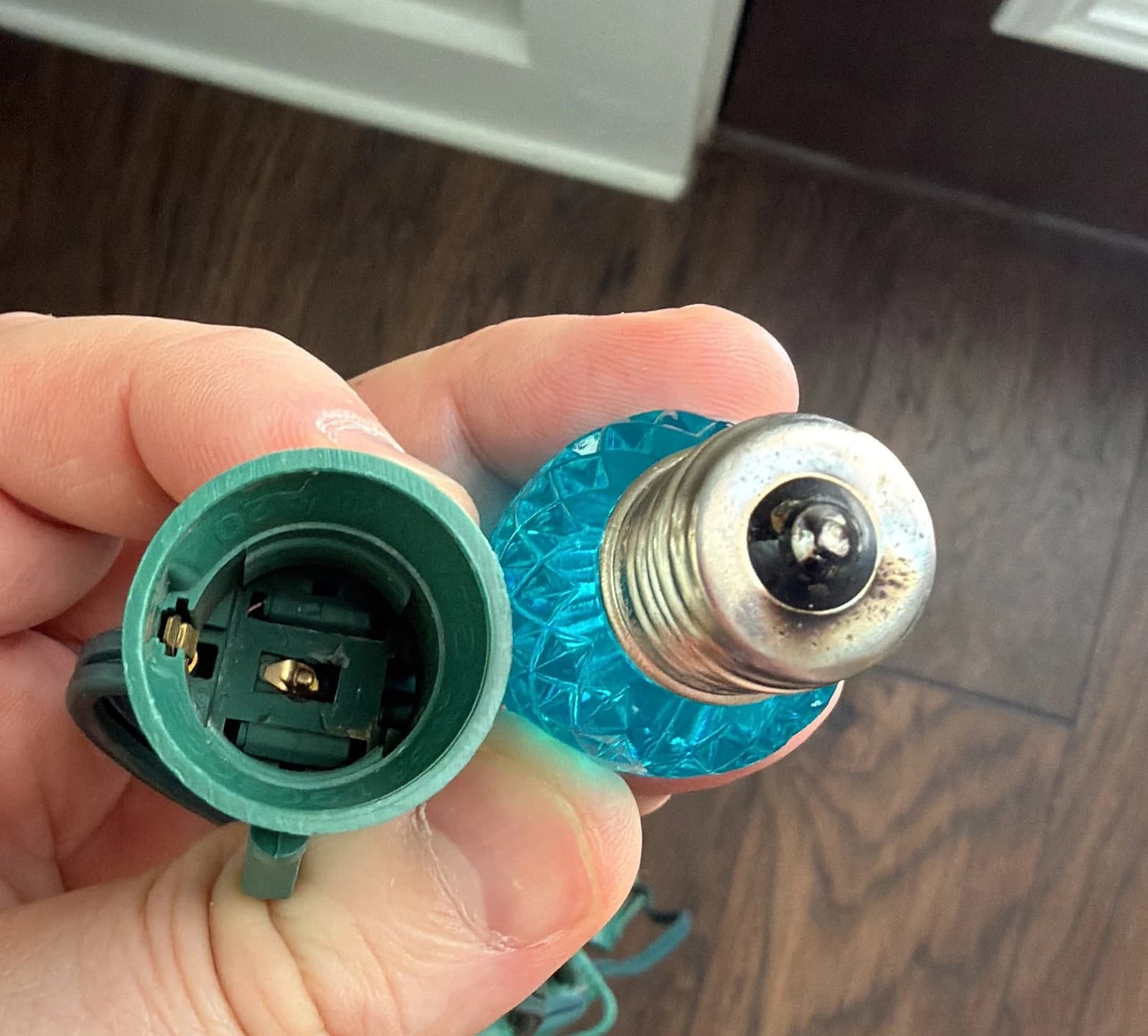
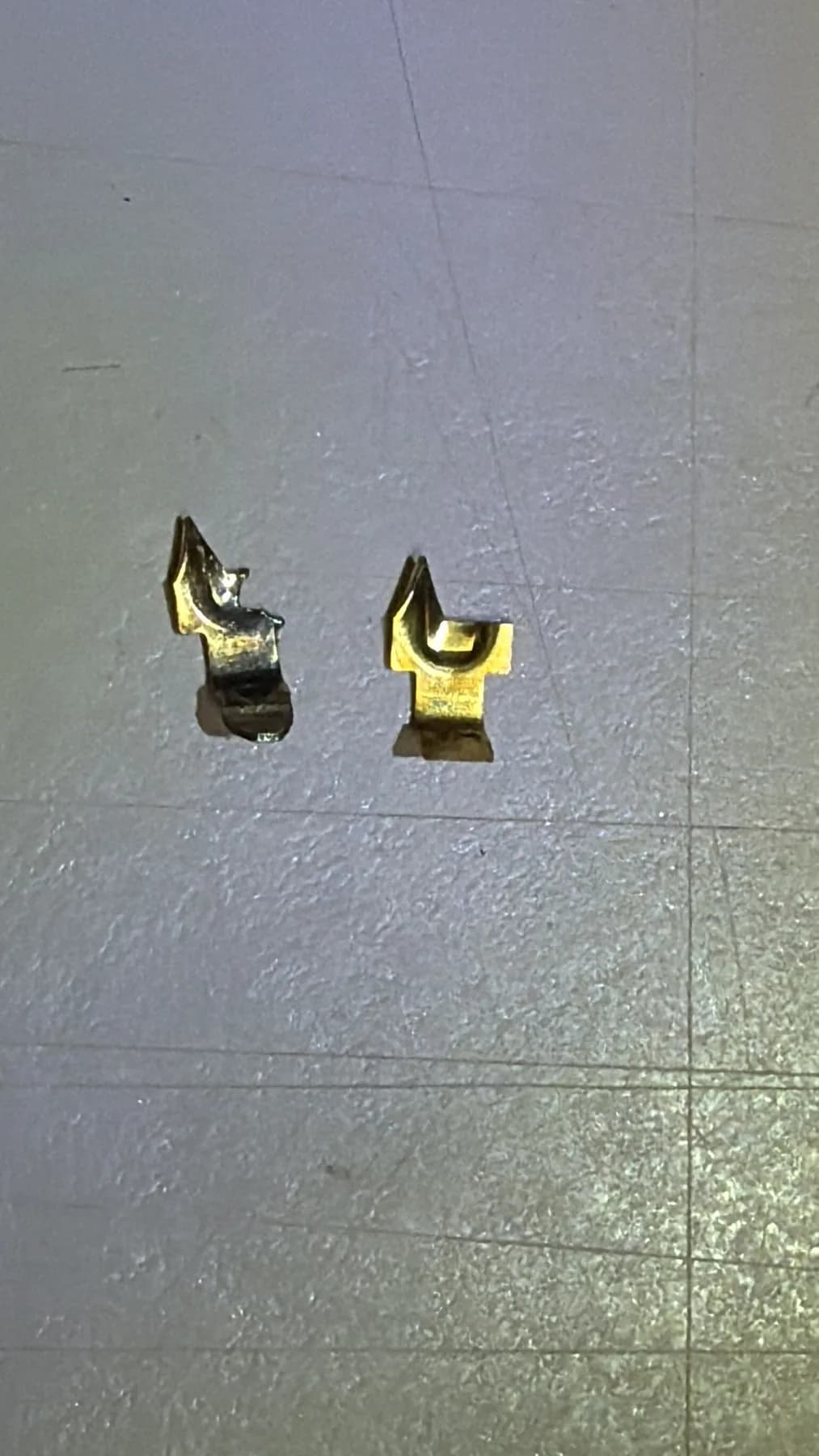
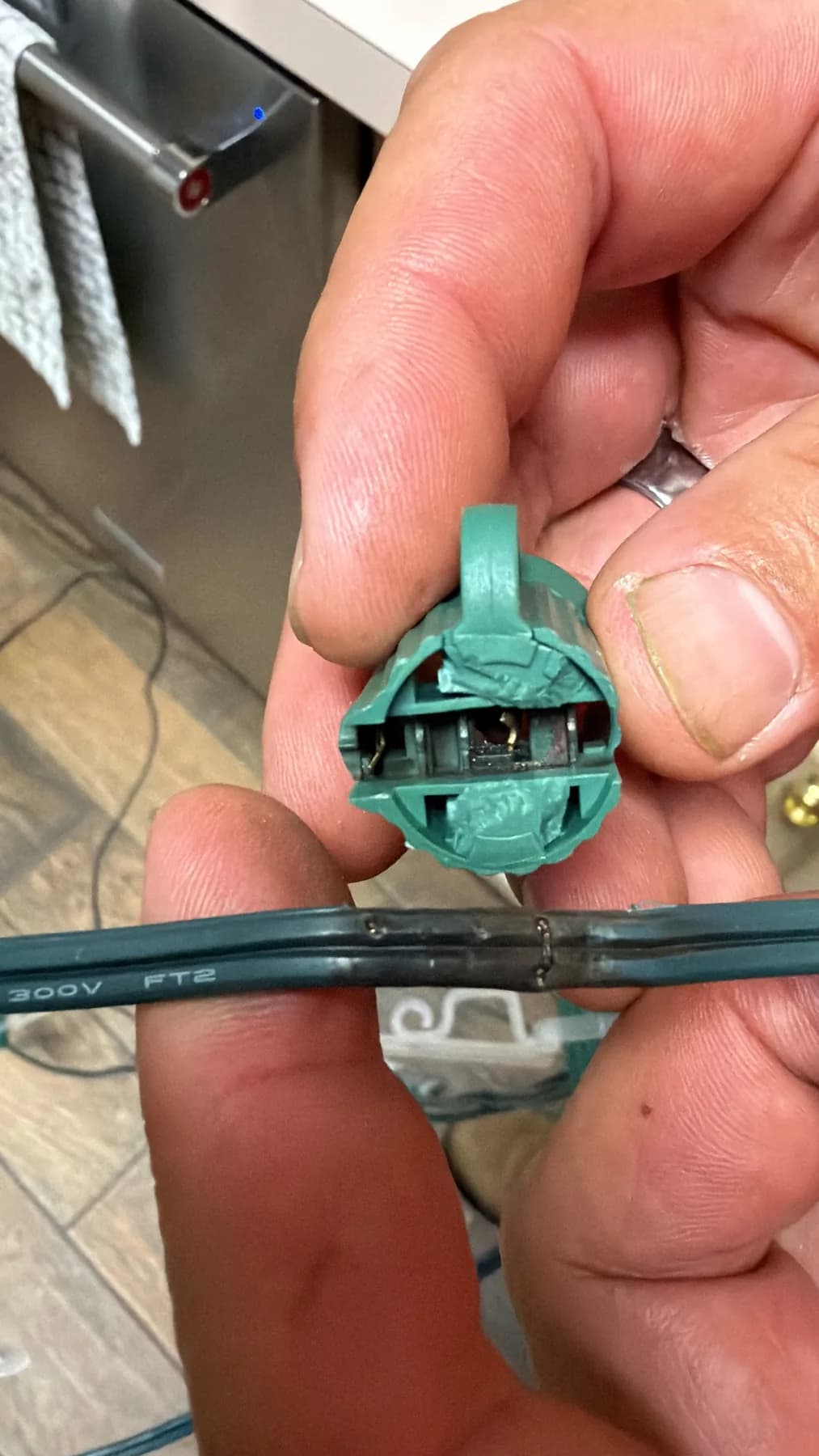
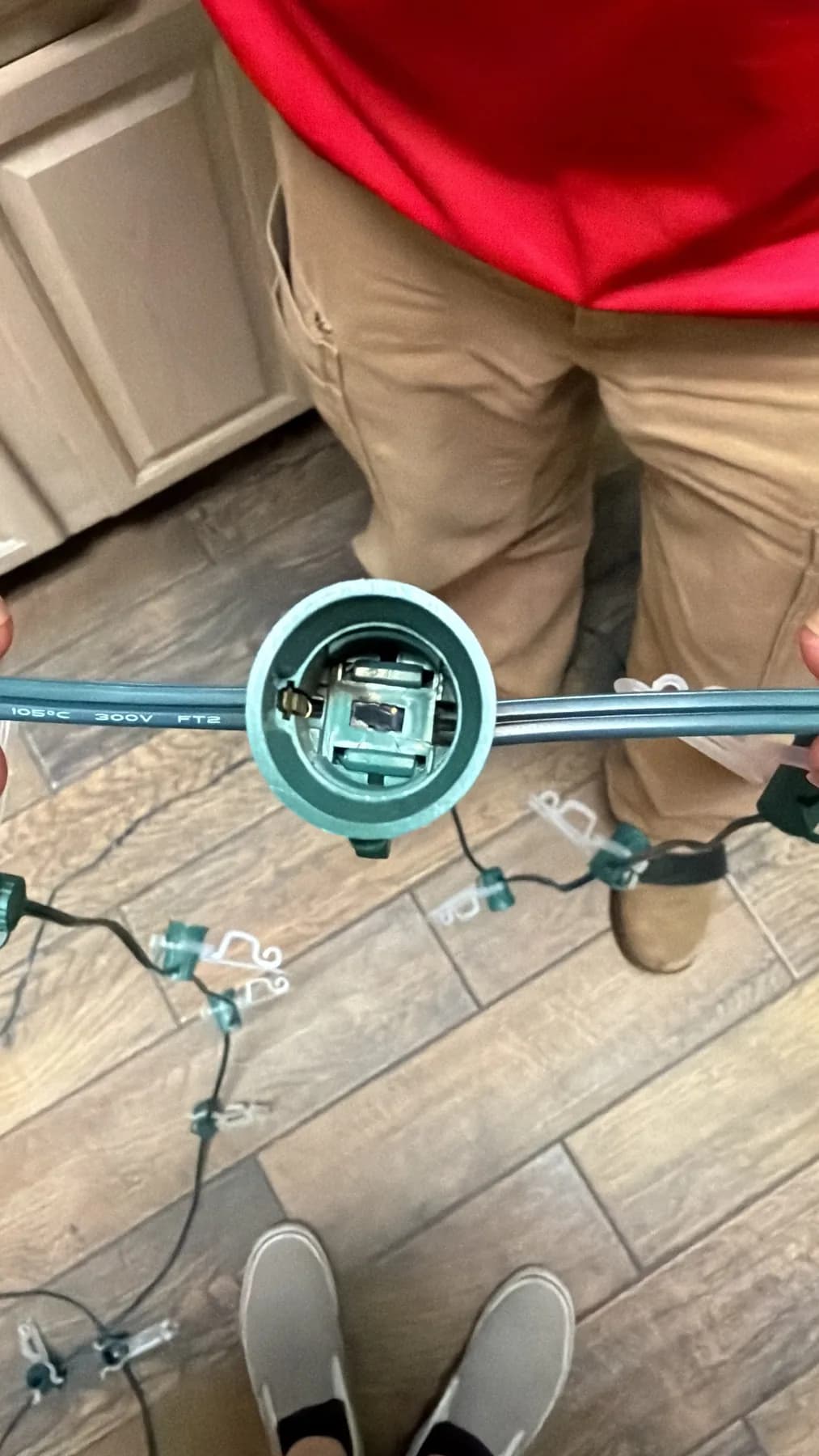
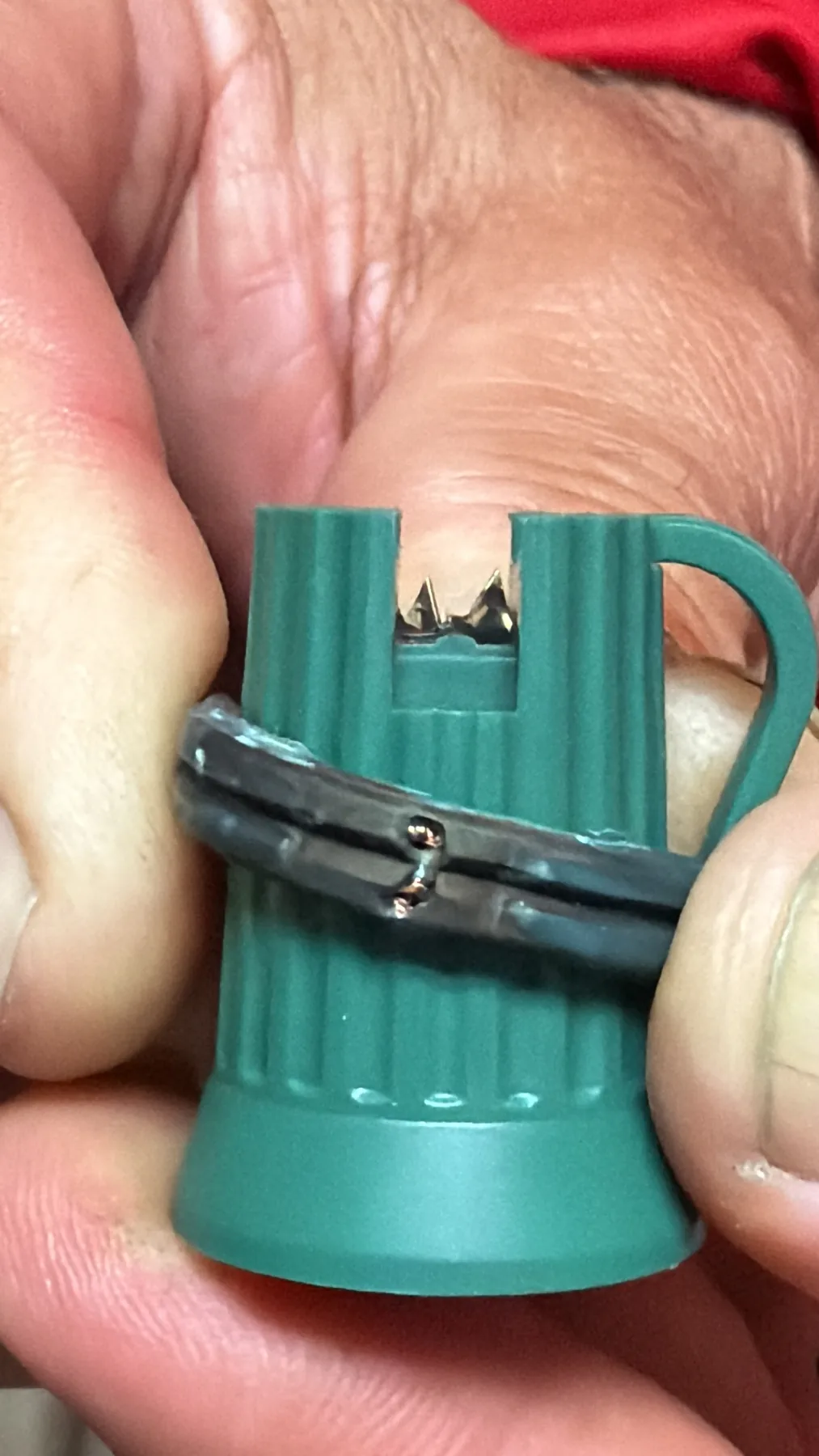
The photos show visible heat damage at a bulb base, opened C9 sockets, the position of the internal contacts, and removed brass terminal pieces. These are useful observations because they narrow the investigation toward the lamp-to-socket interface.
The images do not establish terminal dimensions, material hardness, assembly tolerance, wire compatibility, circuit loading, installation torque, or the condition of every socket on a spool. Those items still need to be checked on physical samples.
The likely failure path
A C9 socket normally keeps the center contact and side contact electrically separate while each one touches the correct part of the E17 bulb base. If a contact is too large, assembled too high, bent, loose, or shifted from its intended position, the clearance can become marginal.
When the bulb is tightened, its base applies mechanical force to those contacts. In a correctly matched socket-and-lamp combination, tightening should create stable contact without collapsing the separation between conductive parts. In a marginal assembly, additional force may move a terminal, damage the contact surface, or bring conductive parts close enough to short or arc. The visible blackening on the bulb base is consistent with a high-heat electrical event, but it does not identify the initiating defect on its own.
The US Consumer Product Safety Commission has long advised inspecting the interior contact arrangement of seasonal light sockets because incorrect contact positioning can create a short-circuit and overheating hazard. That safety principle supports inspecting contact geometry here; it does not replace product-specific testing.
What to do when several C9 sockets fail
Do not continue energizing a failed section to reproduce the event informally. Disconnect power, isolate the affected spools and installed sections, preserve failed bulbs and sockets, and have a qualified person determine the safe inspection and test method. CPSC guidance also recommends removing damaged light sets from use when sockets, wires, or connections are damaged.
- Quarantine the affected spool numbers, cartons, and production lots.
- Record which socket positions failed and which bulb models were installed.
- Photograph the bulb base, socket interior, wire interface, plug, and any heat marks before disassembly.
- Retain matched samples: failed bulb and socket, unused bulb, and unused socket line from the same lot.
- Use a documented sampling plan to inspect remaining inventory instead of relying on one good piece.
- Escalate physical and electrical testing to qualified personnel; do not probe or dismantle energized sockets.
How to screen remaining 1,000 ft spool inventory
The objective of inventory screening is to decide whether the problem is isolated, lot-related, configuration-related, or systemic. A visual check alone is not sufficient, but it is a practical first filter before controlled testing.
- Verify the socket type, bulb base, flat-wire construction, plug configuration, and approved product specification.
- Compare contact shape, height, orientation, retention, and clearance across samples from the beginning, middle, and end of multiple spools.
- Check for pierced insulation outside the intended contact area, exposed conductor, loose terminals, cracked housings, or inconsistent socket assembly.
- Install the approved bulb using a consistent assembly method; do not use excessive tightening as a substitute for poor contact.
- Perform the required continuity, polarity, insulation, dielectric, load, and functional checks under the applicable product specification and test procedure.
- Document sample size, lot identity, results, failures, and disposition so the decision can be traced later.
What buyers should confirm before a bulk C9 spool order
A 1,000 ft spool should not be approved only from the appearance of the reel. The bulb, socket, terminal, wire, plug, assembly process, and test plan operate as one electrical system. Buyers should approve representative finished assemblies and define which characteristics cannot change between sample and production.
- C9 E17 bulb and socket compatibility, including actual production samples.
- Terminal dimensions, material, forming, position, retention, and clearance limits.
- Wire type and dimensions matched to the insulation-piercing socket design.
- Documented in-process inspection and end-of-line electrical testing.
- Lot traceability for wire, sockets, terminals, bulbs, assembly date, and operator or line.
- A written response plan for repeated field failures, retained samples, and corrective action.
How we supported this case
We reviewed the field photos, identified the socket terminal area as the priority for physical investigation, and advised the buyer to sample-test inventory before releasing more product. The buyer then ordered samples from us for comparison and validation.
For qualified supply programs, samples can be produced in China, while Vietnam bulk-production options can be discussed after the product configuration and quality plan are approved. Any sourcing plan remains subject to capacity, product requirements, country-of-origin rules, and the import requirements that apply to the buyer's transaction.
If you are seeing C9 bulb popping, blackened bases, damaged sockets, or repeated failures across a light-line spool, send clear photos, the bulb and socket specification, wire marking, spool or lot information, and a description of when the failure occurs. We can help organize the evidence, review likely compatibility issues, and define the next sample or product-validation step.
Safety references
These sources provide general electrical and seasonal-lighting safety context. They do not certify the specific products shown in this case or replace a physical failure analysis.
- US CPSC — Light SafetySocket-contact positioning, damaged sockets, exposed wires, and short-circuit hazards.
- US CPSC — Holiday Decoration Safety TipsGuidance to inspect cracked sockets, bare wires, and loose connections and remove damaged sets from use.
- OSHA — Electrical Safety-Related Work PracticesDe-energization, verification, and qualified-person requirements for electrical work practices.
Photo review is preliminary. Disconnect and quarantine damaged products, preserve matched samples, and use qualified personnel for physical and electrical testing before any affected stock is returned to service.